
57 in cm: The Ultimate Conversion Guide

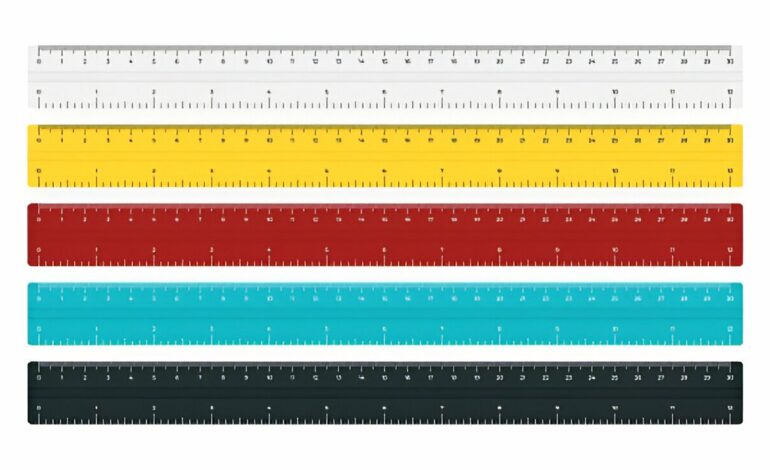
In the realm of measurement conversion, accurately translating inches into centimeters is a skill that offers broad applicability, from academic tasks to everyday life scenarios.
The specific conversion of 57 in cm embodies a common need, showcasing how seemingly simple numerical transformations are pivotal in various fields including, but not limited to, engineering, fashion, and interior design.
Understanding this conversion is not merely about grappling with numerical values; it’s about embracing precision and interchangeability between measurement systems, thereby bridging a gap that often complicates international standards and personal projects.
This guide will meticulously delve into the conversion of 57 inches to centimeters (57 in cm), elucidating the underlying mathematical principles that facilitate this transformation.
Further sections will broaden the scope to include practical applications of these conversions, offering readers insights into real-world scenarios where understanding the equivalence of 57 in cm proves invaluable.
In addition, the article will expand on other common conversions, enhancing the reader’s capability to navigate between measurement systems with ease.
This comprehensive approach aims to equip the reader with not only the knowledge of specific conversions but also the understanding necessary to apply this knowledge adeptly in a variety of contexts.
57 Inches To Centimeters
To convert 57 inches to centimeters (57 in cm), one simply multiplies the length value in inches by 2.54, the conversion factor from inches to centimeters. Therefore, 57 inches is equivalent to 144.78 centimeters. This conversion is fundamental in various fields where measurements need to be precise and universally understood.
Conversion Table for 57 Inches
| Inches | Centimeters |
|---|---|
| 57 | 144.78 |
This table shows the direct conversion of 57 inches to centimeters (57 in cm), facilitating quick reference and verification. For broader applications, understanding this conversion allows for seamless integration into projects that require metric system measurements, ensuring accuracy in international contexts.
How to Convert Inches to Centimeters
Using a Formula
To convert inches to centimeters, the process involves a simple multiplication. The universally accepted conversion factor is that one inch is equivalent to 2.54 centimeters.
Therefore, to find out how many centimeters are in a given number of inches, one multiplies the inch value by 2.54. For instance, to convert 20 inches to centimeters:
[ \text{Distance in cm} = 20 \text{ in} \times 2.54 = 50.8 \text{ cm} ]
This formula ensures that measurements are accurate and consistent, crucial for fields requiring precise data like engineering and design.

Using Online Tools
For those who prefer digital convenience, numerous online tools can automate the conversion of inches to centimeters. These tools typically require the user to input the number of inches, and the corresponding centimeter value is calculated instantly. For example, using an online converter, one would:
- Enter the inch value in the input field.
- Click the “Convert” or “Submit” button.
- View the conversion result displayed in centimeters.
These tools are particularly useful for quick conversions and are accessible on various devices, enhancing their utility in diverse settings.
Practical Applications of Converting Inches to Centimeters
Common Uses in Daily Life
- Traveling Abroad: When traveling to countries that utilize the metric system, understanding how to convert inches to centimeters is crucial. This knowledge aids in interpreting various measurements like height, distance, and area, which are commonly used in daily activities and interactions.
- Shopping: Whether purchasing tires, where the first two numbers of the size designation are in SI units, or buying wine and soda measured in liters, converting measurements ensures accurate understanding and comparison.
Use in Different Fields
- Education: In educational settings, students learn both the Imperial and metric systems. Converting inches to centimeters helps them grasp measurement concepts better and solve mathematical problems involving dimensions more effectively.
- Science: Accurate conversion is vital in scientific applications, such as measuring object lengths or calculating liquid volumes. It ensures precision in experiments and research.
- Do-It-Yourself (DIY) Projects: For enthusiasts undertaking DIY projects, from building furniture to crafting, accurate conversion between inches and centimeters ensures that the dimensions and specifications meet the desired outcomes.
- Professional Scenarios: Incorrect conversions can lead to severe consequences, such as the historical incident involving Air Canada Flight 143, where a miscalculation due to unit conversion resulted in the aircraft running out of fuel. This highlights the importance of precise measurement conversions in professional and technical fields to prevent critical errors.

Other Common Conversions
Feet to Centimeters
When converting feet to centimeters, it is essential to use the conversion factor of 30.48, as 1 foot is exactly 30.48 centimeters. This conversion is crucial for various applications, from construction projects to academic measurements.
- Basic Conversion: To convert feet into centimeters, multiply the number of feet by 30.48.
- Example: To convert 6 feet to centimeters: 6 ft × 30.48 = 182.88 cm
- Practical Application: Consider a room that is 10 feet long. To find out its length in centimeters:
- Calculation: 10 ft × 30.48 = 304.8 cm
- This conversion helps in purchasing the correct size of carpet or floor tiles in centimeters.
Meters to Centimeters
Meters can be converted to centimeters by utilizing the factor that 1 meter equals 100 centimeters. This conversion is often used in scientific and engineering contexts where precision is paramount.
- Direct Conversion: Simply multiply the number of meters by 100 to get the equivalent in centimeters.
- Example: To convert 3.6 meters to centimeters: 3.6 m × 100 = 360 cm
- Application in Daily Life: When measuring for new curtains in a home where the ceiling height is 2.5 meters:
- Calculation: 2.5 m × 100 = 250 cm
- Knowing this measurement ensures that the curtains will perfectly fit from ceiling to floor.
These conversions are fundamental in ensuring accuracy and consistency across various fields that require precise measurement data.
Conclusion
Throughout this guide, we’ve navigated the intricacies of converting 57 inches to centimeters (57 in cm) and explored its vital role across numerous applications.
By breaking down the mathematical foundation behind the conversion and illustrating its practical uses in fields as diverse as engineering, fashion, and daily life scenarios, we’ve underscored the importance of mastering such conversions to bridge the measurement gap between the Imperial and the metric system.
This knowledge not only facilitates precision in various professional and personal projects but also enhances understanding and interchangeability across different measurement standards globally.
As we conclude, it is imperative to remember the broader implications of accurately converting measurements and the significance it holds in ensuring accuracy, preventing errors, and fostering global coherence in technical and everyday contexts.
While further exploration and tools can assist with more complex conversion needs, the foundation laid here equips readers with the essential skills to navigate the world of measurement with confidence. In embracing these conversions, we recognize their critical role in a world where dimensions and precision matter in every scale.