How Tall Is Alexander Volkanovski? Discover the Featherweight’s Height

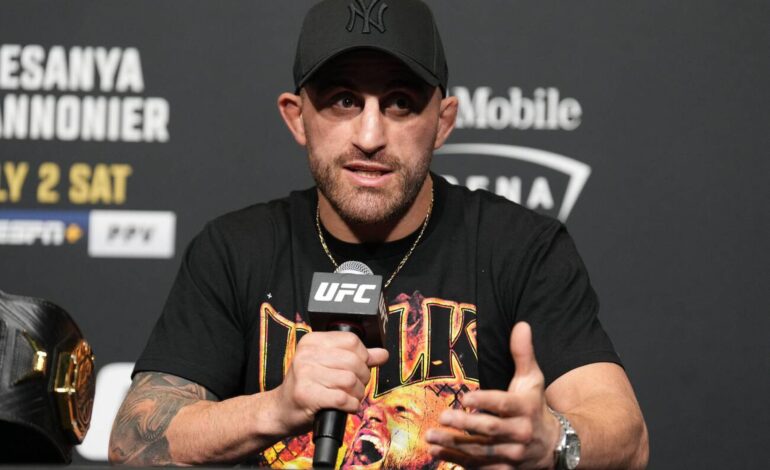
In the realm of mixed martial arts, few questions garner as much curiosity as those concerning the physical attributes of top athletes, such as “how tall is Alexander Volkanovski?” Known for his explosive power and strategic prowess in the featherweight division, Volkanovski’s stature has often been a topic of discussion among fans and analysts alike.
Exploring the height and physical stats of athletes like Volkanovski is not just about satisfying curiosity; it’s about understanding how these factors contribute to their success in the highly competitive environments of combat sports.
Alexander Volkanovski’s Early Career
Transition from Rugby to MMA
Alexander Volkanovski’s journey into the world of Mixed Martial Arts (MMA) began uniquely, rooted in his experiences as a semi-professional rugby player.
At the age of 23, after a successful stint with the Warilla Gorillas, where he was recognized as the league’s best player in 2010 and played a pivotal role in their 2011 Premiership victory, Volkanovski decided to hang up his rugby boots.
His transition was driven by a desire to explore new challenges and a growing passion for MMA, which he initially took up to stay fit during the rugby off-season.
Early Strides in MMA
Volkanovski’s entry into MMA was marked by his immediate success as an amateur, where he quickly racked up a 4-0 record. Recognizing his potential in this new arena, he turned professional, competing across various MMA organizations in the Oceania region.
His early professional career was distinguished by significant victories, including winning the Pacific Xtreme Combat (PXC) title and two Australian Fighting Championship (AFC) Featherweight titles, amassing an impressive record of 13-1 with 10 consecutive wins before making his mark in the Ultimate Fighting Championship (UFC).
UFC Debut and Featherweight Transition
His UFC debut on November 26, 2016, at UFC Fight Night 101, was a significant milestone. Volkanovski showcased his prowess with a second-round TKO against Yusuke Kasuya, extending his win streak to 11.
Following this fight, he announced at the post-fight press conference his decision to drop from lightweight to featherweight, aiming to maximize his performance by competing in a weight class that better suited his physical dimensions and fighting style.
This strategic shift in weight class and the disciplined approach to his training and fight preparation underscored Volkanovski’s commitment to not just participating in MMA but excelling at the highest levels of the sport.
His early career set the stage for what would become a distinguished tenure in the featherweight division of the UFC.
Height and Physical Stats
How tall is Alexander Volkanovski? Height Comparison with Competitors
Alexander Volkanovski’s height is officially recorded as 5 feet 6 inches (168 cm), often finds himself at a height disadvantage when compared to many of his competitors in the featherweight division.
His notable opponents like Max Holloway and Islam Makhachev are 4 to 5 inches taller. Despite this, Volkanovski’s reach of 71 inches frequently gives him an unexpected advantage, surpassing even Makhachev’s 70-inch reach.
This unique physical attribute challenges common assumptions in the sport, where taller fighters are often expected to have a longer reach.

Impact of Height on Fighting Style
Alexander Volkanovski is 5 feet 6 inches (168 cm) tall, which answers the frequently asked question “How tall is Alexander Volkanovski?”
Volkanovski’s stature significantly influences his fighting style, particularly in how he manages distance and executes takedowns.
His shorter, more compact frame offers a lower center of gravity, making him a formidable opponent to take down.
This physical advantage is complemented by his wrestling and striking techniques, allowing him to close distances quickly and effectively, often surprising taller opponents who struggle to leverage their reach advantage.
Moreover, Volkanovski’s ability to remain standing in an opponent’s guard, a technique not easily executed by taller fighters, showcases how his height and shorter leg length allow for powerful strikes even from close range.
This strategy was notably effective in his fights against Yair Rodriguez and Brian Ortega, where his ability to deliver powerful shots from a standing position within the guard played a crucial role in his victories.
His physical stats not only define his approach in the ring but also underscore his resilience and tactical intelligence, turning perceived disadvantages into strategic strengths.
Career Achievements
Titles and Recognizations
Alexander Volkanovski’s illustrious career in the UFC is marked by significant accomplishments and records.
He became the first Australian-born fighter to win a UFC championship, capturing the UFC Featherweight Championship.
His tenure as champion includes five successful title defenses, placing him second for the most title fight wins in UFC Featherweight division history with six victories.
Notably, Volkanovski has been awarded “Fight of the Night” three times against formidable opponents such as Chad Mendes, Brian Ortega, and Islam Makhachev. His performances against Chan Sung Jung earned him “Performance of the Night” honors.
Volkanovski’s prowess is not only recognized in the octagon but also through numerous accolades such as the UFC Honors 2023 Fight of the Year and UFC.com 2023 Fight of the Year, both against Islam Makhachev.
His remarkable achievements extend to being named the UFC Men’s Pound-For-Pound No. 1 in 2022 and 2023, and he has clinched the title of Fighter of the Year multiple times.
Noteworthy Matches
Throughout his career, Volkanovski has been part of several historic matches that have captivated fans worldwide.
His strategic dominance was evident when he dethroned Max Holloway at UFC 245, a victory that not only earned him the featherweight title but also marked a significant milestone in his career.
Another landmark fight was against Brian Ortega at UFC 266, where Volkanovski showcased his resilience and tactical acumen, overcoming near submissions and securing a unanimous decision victory. This bout was later honored as the 2021 Fight of the Year.
His trilogy with Max Holloway is particularly notable, with their second encounter at UFC 251 being recognized for the second most leg kicks landed in a UFC Featherweight division fight.
Volkanovski’s ability to adapt and outmaneuver his opponents was further highlighted in his bouts against Yair Rodriguez and Jose Aldo, where he set records for the most leg kicks and total strikes landed in a fight, underscoring his status as one of the division’s most formidable strikers.
Alexander Volkanovski’s career achievements reflect his exceptional skill, determination, and impact on the sport of mixed martial arts, securing his legacy as one of the featherweight division’s greatest fighters.
Training and Team
Training Regimen
Alexander Volkanovski’s rigorous training schedule is a cornerstone of his success in the UFC. Based primarily at Freestyle Fighting Gym in his hometown of Windang, he also spends significant time at City Kickboxing in Auckland.
These facilities are renowned for their high-caliber training environments, which are crucial for Volkanovski’s preparation.
- Daily Training Schedule: Outside of fight camps, Volkanovski maintains a full schedule, engaging in two to four training sessions per day. These include strength training in the morning followed by various skill-based workouts.
- Strength and Conditioning: His regimen includes trap-bar deadlifts, explosive squat jumps, and barbell hip thrusts. These exercises are complemented by high-intensity interval training (HIIT), which enhances his cardiovascular endurance and muscle efficiency.
- Sparring Sessions: Volkanovski emphasizes the importance of moderate sparring, which occurs twice a week. This approach allows him to experiment with new techniques without the high risk of injury, fostering technical growth and strategic planning.
- Pre-Fight Intensity: Leading up to a fight, his training intensifies with sport-specific drills. Notable routines include the “Meat Grinder” and “Spyda” sessions, which simulate fight conditions to peak his performance right before entering the ring.
- Adaptation for Weight Classes: With his recent move to the Lightweight division, Volkanovski has adjusted his training to focus more on strength and muscle gain, ensuring he remains competitive against larger opponents.
Coach and Team Affiliations
Volkanovski’s coaching and training environment are pivotal to his development as a top-tier fighter. He trains under the guidance of head coach Joe Lopez at Freestyle Martial Arts, and also with renowned coaches and fighters at other elite training centers.
- Main Coach: Joe Lopez has been a significant figure in Volkanovski’s career, overseeing his progression from a promising athlete to a champion fighter.
- Training Partners: His time at City Kickboxing in Auckland allows him to train alongside other UFC fighters like Israel Adesanya and Dan Hooker, creating a highly competitive and enriching environment.
- Global Training Camps: Regular camps at Tiger Muay Thai in Phuket and City Kickboxing help him diversify his training regimen, gaining exposure to different fighting styles and techniques.
- Team Dynamics: The camaraderie and bonds formed with fellow fighters such as Brad Riddell and Kai Kara-France at these camps have been instrumental in his career, providing both support and rigorous sparring opportunities.
Alexander Volkanovski’s commitment to an exhaustive training regimen, supported by a dedicated team and world-class facilities, continues to underpin his success in the highly competitive world of mixed martial arts.
Public Perception and Media Presence
Alexander Volkanovski’s journey in the MMA world has not only been about his fights inside the octagon but also about how he connects with fans and presents himself to the public.
His interactions, both in person and through various media platforms, have significantly contributed to his image as a respected athlete and public figure.
Social Media Influence
Volkanovski’s presence on social media platforms has been a key factor in building a strong connection with his fan base. He often shares insights into his training regimen, behind-the-scenes moments, and personal reflections on his career.
This openness has endeared him to many, making his social media accounts a hub for fans seeking a closer look at the life of a professional MMA fighter.
His comments on the support from fans during events, “the fans uh for the last couple of times I’ve been in crowds just been unreal you know what I mean so you know obviously appreciate every single one of them and thank you for turning out,” highlight the mutual respect and appreciation between Volkanovski and his supporters.
Moreover, his ability to engage with fans on a personal level, even through the digital realm, has played a crucial role in enhancing his public image.
Whether it’s acknowledging fan support or sharing moments from his life outside the ring, Volkanovski’s social media influence reflects his genuine connection with those who follow his career.
Public Statements and Interviews
Volkanovski’s public statements and interviews have always been a reflection of his confidence and sportsmanship.
His remarks on competitors, such as his acknowledgment of an opponent’s confidence and its impact on fights, show a deep respect for the sport and its athletes.
For instance, his comments on a competitor’s confidence, “he’s a he’s a good dude you know he’s just uh you know playing I don’t know if he’s playing the game or what it is but yeah look he’s confident young fel uh and hey so he’s got every right now right like I can’t say much other than congratulations it worked out like that’s a tough game you got to play when you want to go down that route uh and it worked out for him tonight,” demonstrate his sportsmanship and understanding of the mental aspects of fighting.
Furthermore, his ability to remain humble and focused, even after a loss, as seen in his statements giving credit to his opponents, underscores his professionalism and the respect he commands in the MMA community.
His candidness in interviews, sharing his thoughts on fights, and expressing his eagerness to stay active in the sport, “um yeah look man I just want to say to the the UFC please keep me busy um I don’t do well when I’m not fighting uh I needed to take this fight cuz I was doing my head in when I’m not fighting so um please keep me busy uh I’m happy to go back in January and um obviously get this taken care of uh obviously go back down to to featherweight obviously my job here is done for now,” reveals his dedication and passion for MMA.
Alexander Volkanovski’s media presence and the way he interacts with the public play an integral role in shaping his image as a champion who is not only formidable inside the octagon but also approachable and respected outside of it.
His social media influence and public statements reflect his character, showcasing a fighter who values his fans, respects his opponents, and is deeply committed to the sport of MMA.

Upcoming Fights and Future Prospects
Scheduled Matches
As the MMA community buzzes with anticipation, Alexander Volkanovski’s fight calendar remains a topic of keen interest.
While specific details about his next fight are yet to be announced by the UFC, there is a strong desire from Volkanovski for a rematch against Ilia Topuria.
This potential bout is targeted for an upcoming UFC event in Spain in 2024, promising to be a significant draw given the fighters’ history and skills.
Potential Opponents
Looking beyond the scheduled matches, the featherweight division is ripe with talent that could pose interesting challenges for Volkanovski.
With Islam Makhachev set to defend his lightweight title against Dustin Poirier at UFC 302, and Max Holloway eyeing a potential matchup with Ilia Topuria later this year, the dynamics within the division continue to evolve.
Volkanovski’s readiness to engage with formidable opponents like Topuria, who has never lost inside the cage, underscores his commitment to maintaining his status at the pinnacle of the sport.
This scenario sets the stage for Volkanovski to either reclaim his dominance or pass the torch in a division that is as competitive as ever.
Conclusion
Let’s sum up by saying that the investigation into “How Tall Is Alexander Volkanovski?” exposes more than just a number; it reveals the core of his strength and fighting spirit.
Throughout the exploration of Alexander Volkanovski’s career, we have delved into the intricacies that define him not just as a fighter but as a sports icon whose stature extends beyond the confines of the octagon.
From his early transition from rugby to MMA, the strategic move to the featherweight division, to his rigorous training regimen and significant career achievements, Volkanovski’s journey is a testament to the power of determination and skillful adaptation.
His ability to leverage his physical attributes, coupled with a tactical intelligence, has not only challenged conventional wisdom within MMA but also solidified his standing as a distinguished champion in the sport’s annals.
The reflection on Volkanovski’s public image and upcoming fights underscores his enduring influence on mixed martial arts and hints at the exciting prospects that lie ahead.
Maintaining an unwavering focus on excellence, while nurturing a genuine connection with fans, Alexander Volkanovski’s legacy extends beyond his victories and titles. It embodies the spirit of MMA: resilience, respect, and the relentless pursuit of greatness.
As we look to the future, whether inside the cage or through his impact on the sport, Volkanovski’s journey continues to inspire, making clear that his contributions to MMA will resonate for years to come.